Speaker Placement Planner
A starting-point speaker and listening position layout in under two minutes.
What it does
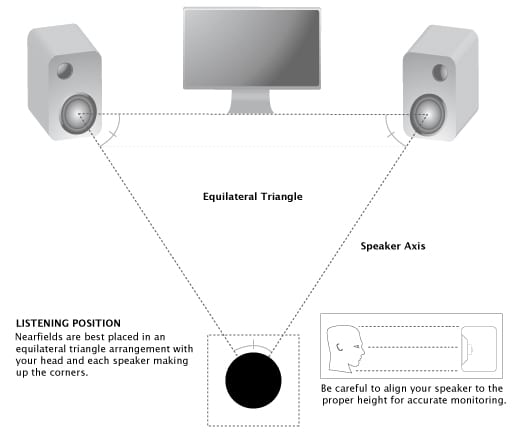
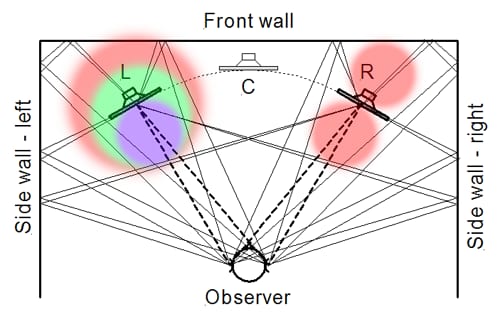
Enter your room dimensions and get a labeled starting-point layout for your monitors and listening position, an equilateral triangle check, symmetry check, and boundary interference warnings.
Built for: Producers setting up monitors for the first time or troubleshooting a narrow/vague stereo image.
Features
- Listening position starting point (labeled heuristic, not a fixed rule)
- Speaker distance from front and side walls
- Equilateral triangle distance calculation
- Symmetry check for your specific room width
- Boundary interference (SBIR) risk estimate
- Editable spreadsheet - adjust every assumption
What's included
smt-speaker-placement-planner-v1.0-worksheet.xlsxsmt-speaker-placement-planner-v1.0-guide.pdfREADME.md
Compatibility
- Microsoft Excel (2016 or later) or Google Sheets
- Works on Windows, Mac, and in-browser via Google Sheets — no installation required
What this does not do
- Gives a labeled starting-point layout, not a guaranteed-correct one — every room has quirks (doors, closets, furniture) a spreadsheet can't see
- Does not account for speaker-specific directivity/dispersion data — it uses standard geometric heuristics
- Does not include stands, isolation pads, or any physical hardware
Frequently asked questions
Will this tell me the exact spot to put my chair?
It gives you a starting-point distance and the equilateral-triangle math most engineers start from. From there, small adjustments by ear are normal and expected.
Does it work for any room shape?
It's built around rectangular rooms with front-wall speaker placement, which covers most home studios. Unusual layouts (L-shaped rooms, mid-room setups) will need more judgment on top of the numbers.
What's SBIR and why does it show a warning?
Speaker Boundary Interference Response — when a speaker sits close to a wall, floor, or ceiling, reflections cancel or reinforce certain frequencies. The planner flags when your current distances put you at risk so you know before committing to a layout.